 Beyond the Overlook
Where to Stay in National Parks: Inside vs. Outside the Park
We do not automatically stay inside a national park. Sometimes the location saves hours of driving or gives you an experience you cannot reproduce outside the gates. Other times an Airbnb, hotel in a gateway town or campground is the much smarter choice.
Firsthand guide · Updated September 2026 · How we review our guides
The short answer: We choose national park lodging by asking what will make the trip work better, not by automatically choosing inside or outside. In a huge park, the right in-park room can save hours of driving. In a compact park or one with a great gateway town, staying outside may be easier and less expensive. For large groups, a kitchen and extra bedrooms can matter more than being inside the boundary.
Start with the map, not the hotel
Before we book lodging, we figure out what we actually want to do. The distance to the park entrance is not the number that matters. We want to know how long it will take to get from the room to the hikes, viewpoints and activities we actually plan to do.
This is especially important in parks like Glacier, Yellowstone, Big Bend and Death Valley. A hotel that looks reasonably close on a map can still leave you with a long drive before you reach the part of the park you came to see. When we are already planning a big hiking day, adding a substantial commute on both ends of it is not appealing.
That is why we are sometimes willing to accept a simpler room, fewer amenities or a higher price. We are paying for location and time, not necessarily luxury.
Do not assume one hotel is better than moving around
One of the biggest mistakes we think people make is assuming they should choose one hotel and use it as a home base for the entire trip. That works in some parks. In others, it means spending hours every day driving roads you already drove yesterday.
Yellowstone is our best example. We stayed in three different hotels inside the park as we moved through Yellowstone. Packing up more often was a little less convenient, but Yellowstone is enormous. We would rather move our luggage than spend several hours retracing our route just to get back to the same room every night.
We use the same logic anywhere a park is spread out. Plot the must-do activities first. If one hotel has you repeatedly driving an hour or more back toward the same room, it may be worth changing hotels. The goal is to design the lodging around the trip rather than designing every day around the lodging.
Sometimes staying inside gives you something you cannot replicate
Not every in-park stay is about drive time. Sometimes the location itself is part of the experience.
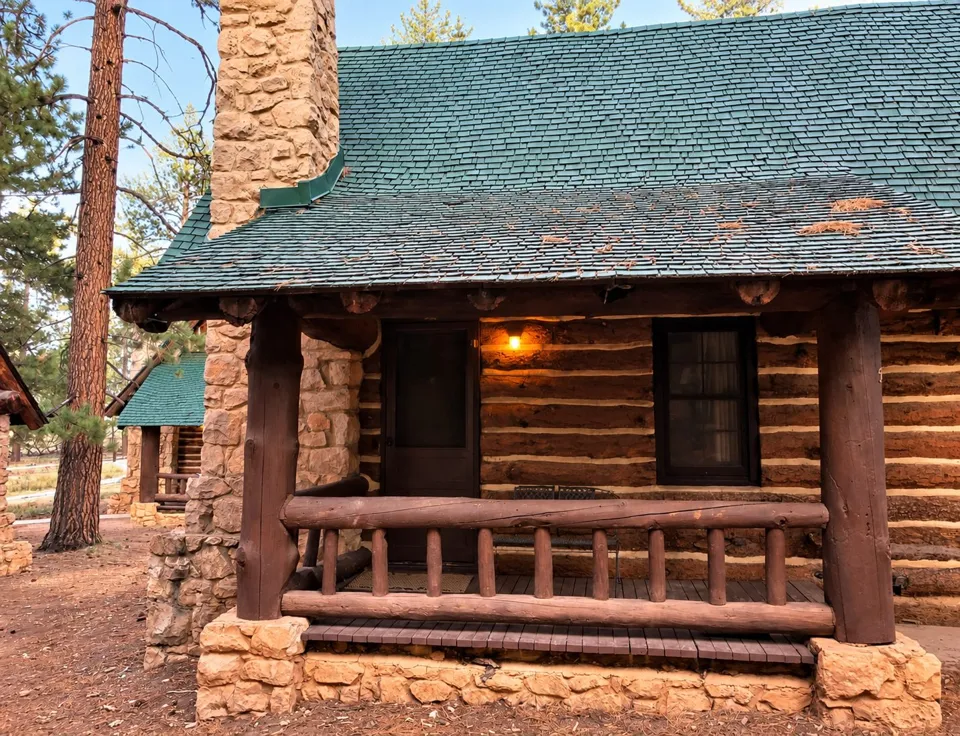
Bryce Canyon is a great example. There are places to stay outside the park, and the distances are not Yellowstone-sized. But nothing replaces waking up and being right there beside the hoodoos. Sunrise does not have to become an excursion. You walk outside.
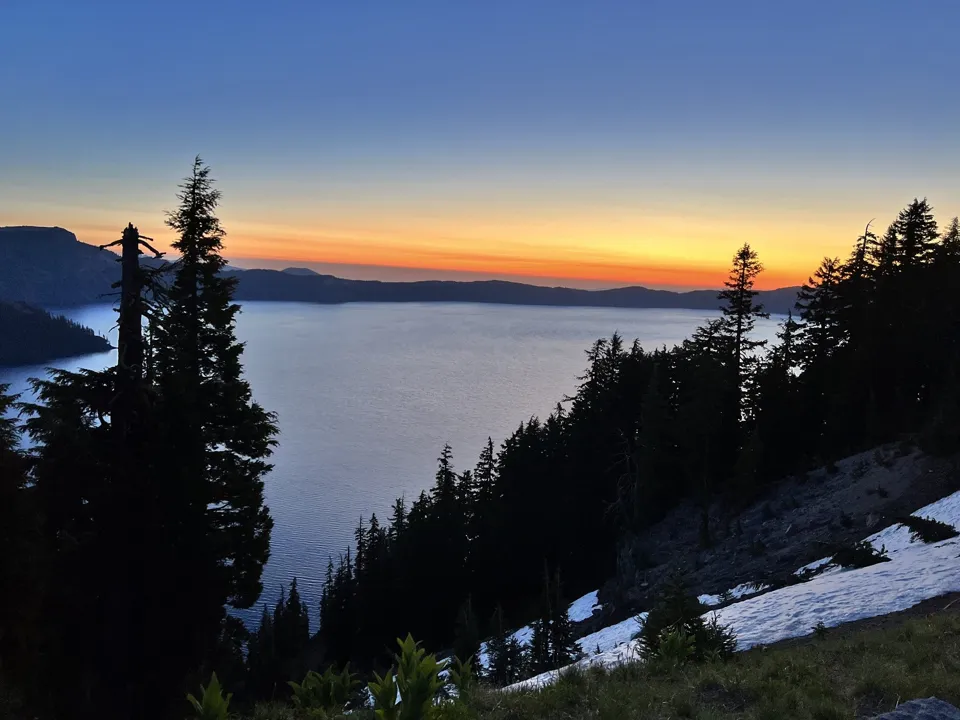
Crater Lake is another place where we would lean strongly toward staying inside. There is not a dense ring of lodging immediately outside the park, and Crater Lake Lodge sits on the caldera rim. The National Park Service notes that some of the next larger lodging areas are more than 40 miles away. When this is the view outside the lodge, staying on the rim is part convenience and part experience.
In the biggest parks, a convenient room can be worth more than a nicer room
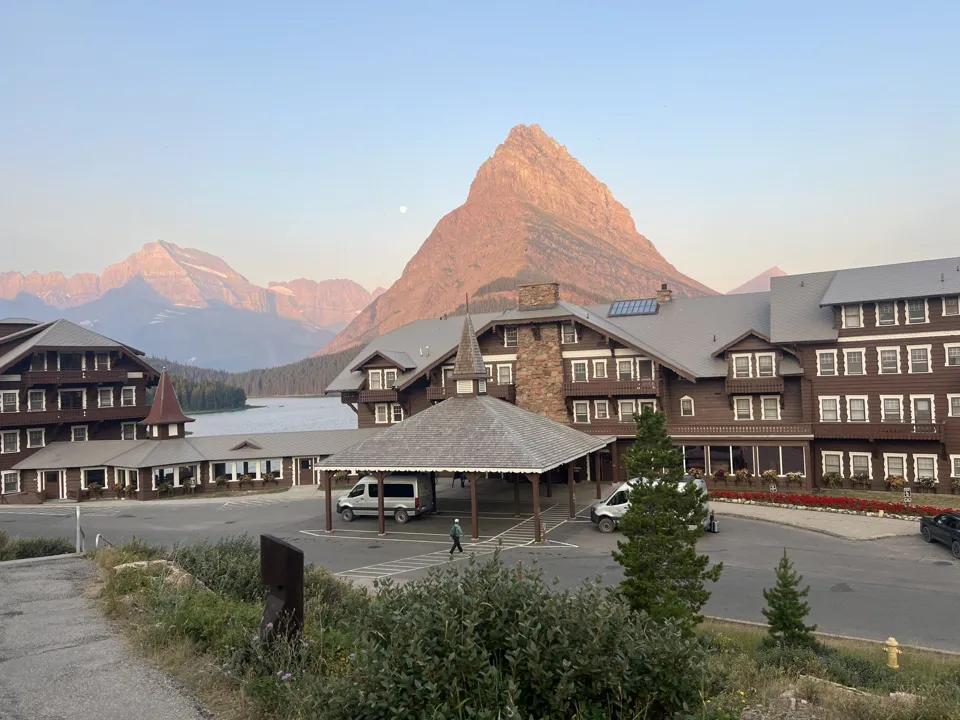
Glacier is one of our clearest examples. Staying at Many Glacier put us in the part of the park where we wanted to be for major hiking days. The rooms are not the reason we would choose it. The mountains, lake and access are.
Big Bend was similar. The park is remote and enormous, and staying in the Chisos Basin put trails right outside. In a place like this, location can make the difference between starting the day on the trail and starting it with a long drive.
Death Valley gave us a slightly different version of the same lesson. We stayed at Stovepipe Wells. It was not the most expensive in-park option, but it kept us inside a massive park and reasonably close to what we wanted to do. Staying inside does not always mean booking the iconic or most expensive lodge. Sometimes the best value is simply the room that prevents you from spending the vacation commuting.
But staying inside is not automatically better
At Hawaiʻi Volcanoes National Park, we stayed in an Airbnb about five minutes away. For our group, that was perfect. We had more room and a kitchen without giving up meaningful park access.
Other parks have similar situations. Estes Park gives Rocky Mountain visitors a substantial gateway town right beside the park. Jackson makes staying outside Grand Teton much easier. Joshua Tree has convenient gateway communities, so we would not prioritize an in-park stay simply for the sake of being inside the boundary.
Zion falls somewhere in the middle for us. Staying at Zion Lodge is convenient and special, but Springdale is immediately outside the park with restaurants and plenty of lodging. We see an in-park room there as a nice-to-have rather than a requirement.
Large groups can completely change the answer
Park lodging becomes much less attractive when we are traveling with a large group. You may need several rooms, bed configurations can be awkward, and the total cost climbs quickly. A house or condo outside the park can give everyone more space, a kitchen and somewhere to gather.
This is why we never use a blanket rule. For a couple doing long hiking days, a park lodge may be perfect. For a family group that needs four bedrooms and a kitchen, the exact same lodge may be a terrible fit.
Don't confuse expensive with luxurious
Most national park hotels we have stayed in have been fine. That is not an insult. We are usually choosing them because of where they are, not because they are the nicest accommodations available for the price.
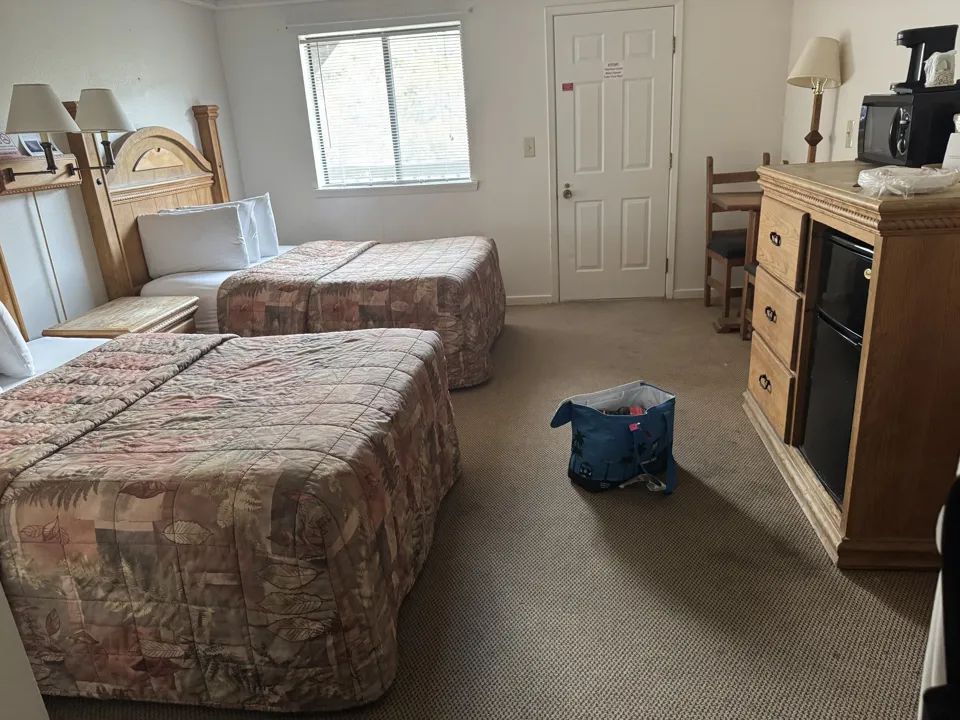
Room types can vary considerably, even within the same property. We do not assume a traditional park hotel room will have a refrigerator, microwave or any way to cook. Some do have mini-refrigerators, but many do not, so we check the exact room before relying on one. In-room cooking is also prohibited at many park lodges.
There are usually dining options at the larger lodging areas, but that does not solve every early breakfast, packed lunch or trail-day food problem. We travel with a cooler.
A surprisingly useful amenity: ice
Ice is one of those small things that becomes very useful on an active park trip. We use it to keep food cold in the cooler and to make filling bottles with cold water before a hike easy. Many traditional park lodging properties provide ice, but we still verify amenities when they matter to the trip.
Camping can be the best compromise
Staying inside a national park does not have to mean paying for a lodge. Many parks have fantastic campgrounds, and camping can solve two problems at once: cost and location.
You also do not have to camp for the entire trip. One strategy we like is one campground night followed by a hotel night. You get the inexpensive, incredibly convenient night in the park, followed by a real bed and a shower. For an active trip where most of the day is spent outside anyway, that can be a great balance.
What about the Grand Canyon?
We drove into the Grand Canyon from elsewhere rather than staying inside, so we cannot give a firsthand review of its park hotels. But this is one park where we can absolutely see the advantage. Being able to walk out for sunrise or sunset instead of turning those into driving excursions has real value.
For hikers, Phantom Ranch is an even more interesting example. Staying at the bottom of the canyon is not simply a more convenient hotel choice. It can change how you structure the hike itself. That is the kind of lodging we think should be evaluated differently from a normal comparison of room quality and nightly price.
Yosemite: pay attention to what “outside” really means
Yosemite is another park where we would look carefully at the map before choosing an outside hotel. There are plenty of accommodations beyond the park boundary, but that does not mean they are close to Yosemite Valley or the trailheads you want. In a park where drives can already be substantial, saving money on the room can cost you time every day.
Book early, but keep checking
The most desirable park lodges and room configurations can be difficult to get. Yellowstone's National Park Service lodging guidance, for example, specifically recommends making reservations early because park lodging fills quickly. Crater Lake Lodge reservations can be made a year in advance.
But a sold-out night is not necessarily the end of the story. Plans change and rooms reappear. We keep checking. A single available night can still be useful, especially because we are willing to move hotels rather than requiring one property for the entire trip.
How we decide where to stay
We ultimately come back to one question: what lodging choice will make the trip itself better?
If staying inside saves hours of driving, we lean inside. If waking up in that location is an experience in itself, as it was for us at Bryce Canyon and Crater Lake, we are willing to pay something for that. If an Airbnb five minutes outside gives our group bedrooms, a kitchen and more space, we happily stay outside. If camping gives us an amazing location at a fraction of the price, we consider that too.
And if the park is enormous, we will not force one hotel to work for the entire trip.
Our rule: Do not choose lodging just because it is inside the park, and do not choose the cheaper room outside until you calculate the driving it creates. The goal is not to sleep inside a national park. The goal is to spend as much of the trip as possible experiencing it.