 Beyond the Overlook
How Far Should You Hike Down South Kaibab?
Ooh Aah Point gives you the below-the-rim experience without committing to the Colorado River.
Firsthand guide · Last reviewed August 2026 · How we review our guides
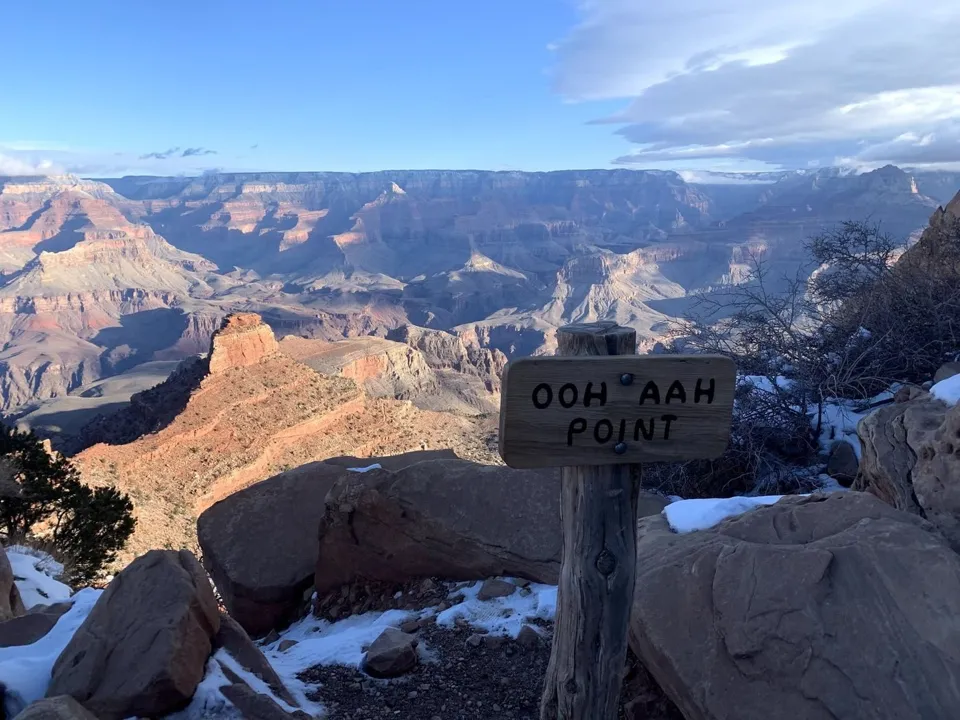
Our recommendation: If you are physically able, do not make the rim overlooks your entire Grand Canyon experience. At least hike to Ooh Aah Point.
You do not need to hike to the river
Our full South Kaibab day was enormous, but that is not the only way to experience the canyon from inside it. South Kaibab has three excellent turnaround points that let you choose how much climbing you want to commit to.
| Turnaround | Round trip | Elevation change | NPS estimate |
|---|---|---|---|
| Ooh Aah Point | 1.8 mi | 790 ft | 1–2 hr |
| Cedar Ridge | 3.0 mi | 1,120 ft | 2–4 hr |
| Skeleton Point | 6.0 mi | 2,040 ft | 4–6 hr |
Ooh Aah Point: the minimum we would do
Ooh Aah Point is only 0.9 mile down South Kaibab, but it already changes the experience. The trail opens to a wide view and you are no longer simply looking across the canyon - you are standing inside it.
The catch is obvious but important: the 790 feet you descend are waiting for you on the way back. Short does not mean flat.
Cedar Ridge: a stronger taste of the trail
At 3 miles round trip, Cedar Ridge gives you more time on South Kaibab without turning the day into a major expedition. NPS specifically describes it as a good turnaround for first-time canyon hikers, casual hikers and late starters.
Skeleton Point: first view of the river
Skeleton Point is where the commitment becomes much more substantial. At 6 miles round trip and just over 2,000 feet of elevation change, it is a real hike. It is also the first point on South Kaibab where you can see the Colorado River.
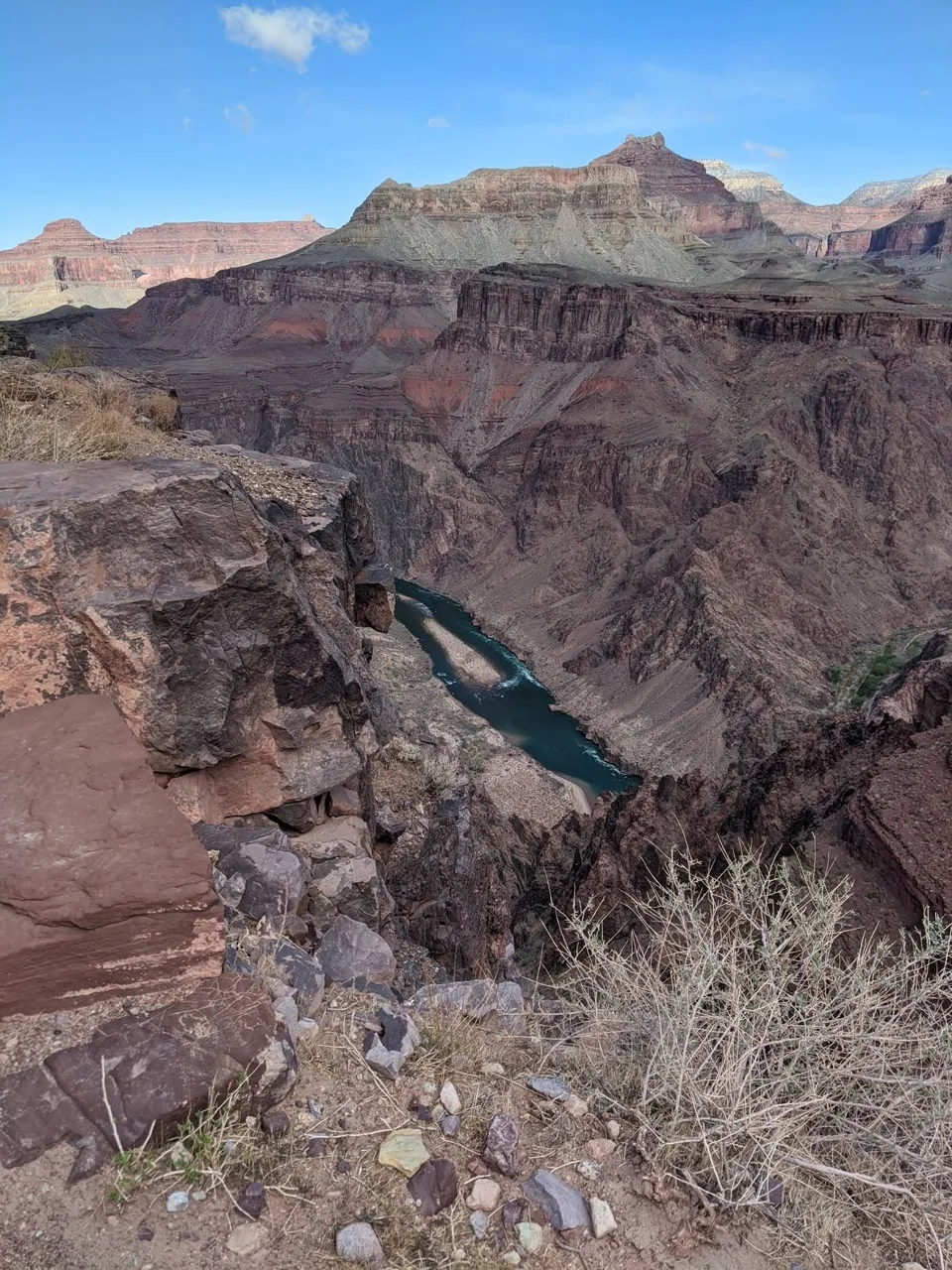
NPS advises hikers to check with a ranger before attempting Skeleton Point as a day hike and does not recommend going below it as a day hike.
The important Grand Canyon rule: save energy for the climb out
Every South Kaibab option begins downhill, which makes it easy to keep going. Turn around before you feel tired. There is little shade, no water on the trail, and the return is all uphill.
Which would we choose? Ooh Aah Point if time is short. Cedar Ridge for a satisfying half-day taste of the canyon. Skeleton Point only if you are prepared for a much bigger climb. The full river day is a separate level of commitment.
Want the full story? Read our South Kaibab rim-to-river experience.