 Beyond the Overlook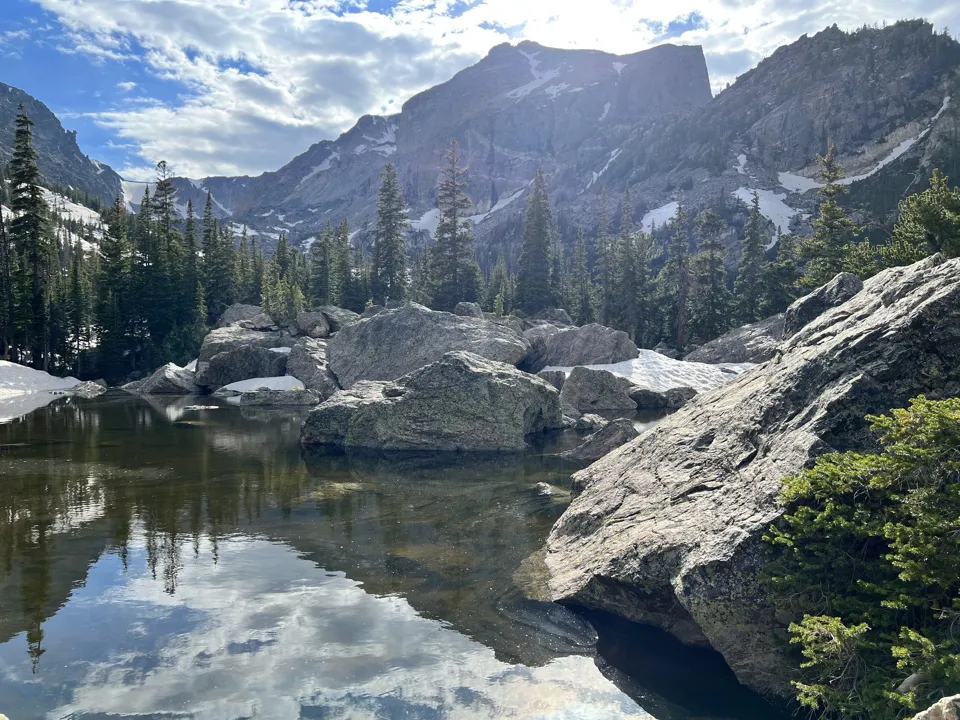
Chasm Lake was an adults-only hike for us and one of the more serious days of the trip. The scenery is excellent, but our mid-June conditions are the reason we remember the final approach so clearly.
Chasm Lake quick facts
The final section was icy
Immediately before the lake, we encountered an icy section that was difficult enough that not everyone in our group chose to cross it. Part of our group reached Chasm Lake; part stopped just before it.
Reaching a destination is never more important than being comfortable with the conditions in front of you.
Higher-elevation June conditions can be very different from conditions in Estes Park.
Who it is for
This is a strong-hiker option, not a first-day acclimation hike. It makes much more sense after your group has already spent time moving at Rocky Mountain elevation.
Start early
Afternoon thunderstorms and lightning are a major consideration on this high-elevation route.
Trail snapshot
Distance: About 8.4 miles round trip by the park's trail mileage · Elevation gain: About 2,360 feet · Difficulty: Hard · Start: Longs Peak Trailhead · Best for: Strong hikers comfortable making conservative weather and snow decisions
Why this is a serious step up
The mileage alone does not tell the whole story. The Longs Peak trailhead is already around 9,300 feet, and Chasm Lake sits much higher. The route climbs from forest into increasingly exposed alpine terrain beneath Longs Peak. The combination of altitude, gain and exposure makes it feel more serious than a typical eight-mile hike.
The final approach
The last part is also the piece most likely to change with conditions. Our mid-June trip still had enough ice near the lake that one of us stopped before the final crossing while the other continued. Later in summer that same location can be completely different, which is why current conditions matter more than a generic trail description.
Parking is part of the plan
The Longs Peak trailhead is very popular and can fill early. An early arrival is useful for two reasons: parking and weather. Starting early also gives you much more margin to be descending before afternoon storms develop.
What we'd bring
For us this belongs in the same gear category as the other big mountain days: layers, rain shell, plenty of water, substantial food, trekking poles, headlamp, downloaded route and a portable phone charger. In snow season, determine whether traction and winter travel skills are appropriate for the actual conditions.
When to turn around
Ice, building clouds, thunder, strong wind, fatigue or simply not liking the footing are all good reasons. Our own hike is a perfect example: two people can reach the same point, look at the same terrain and make different reasonable choices.
Questions we had about Chasm Lake
How hard is Chasm Lake?
It is a serious high-elevation hike. The mileage is only part of the difficulty: altitude, weather and trail conditions can change what the final approach feels like.
Did everyone in our group reach Chasm Lake?
No. Part of our group reached the lake and part stopped just before it because an icy section did not feel worth the risk. We think that is an important part of the story rather than a failure to finish.
Is Chasm Lake a good family hike?
For our trip this was an adults-only, strong-hiker day. Families with experienced hiking teens may make a different choice, but we would judge it by current conditions and comfort at altitude rather than age alone.
Why start Chasm Lake early?
The route spends significant time high and exposed. An early start gives you more margin for changing weather and makes it easier to be descending before afternoon thunderstorms become a concern.