 Beyond the Overlook
Road to Hāna: Drive It Yourself + Don’t Rush It
The Road to Hāna is not a road you race through to check off stops. Driving it ourselves and sleeping along the route let us actually enjoy it.
Firsthand guide · Last reviewed August 2026 · How we review our guides
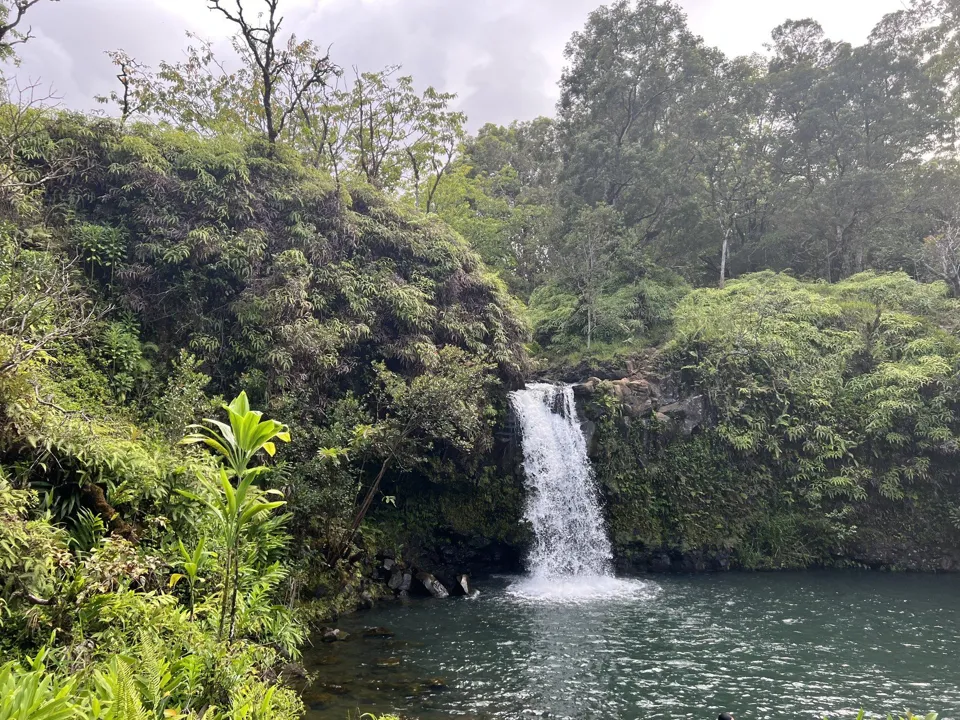
Our biggest recommendation: drive yourself and stay overnight if your schedule allows. The flexibility was worth far more to us than having a tour handle the driving.
Our Road to Hāna strategy
The Road to Hāna worked for us because we treated it as the experience, not as transportation to Hāna. We drove ourselves, used GuideAlong as an audio guide, stayed overnight beyond Hāna and left room to stop when something looked interesting. That meant we were not racing a checklist or watching the clock every time we pulled over.
The highway is only about 52 miles from Kahului to Hāna, but that number is misleading. The official Hawaiʻi tourism site describes 620 curves and 59 bridges, including narrow one-lane bridges. Even without sightseeing stops, the drive can take hours. Add waterfalls, food stands, gardens, beaches and viewpoints and it easily becomes a full day.
Don’t over-plan every stop
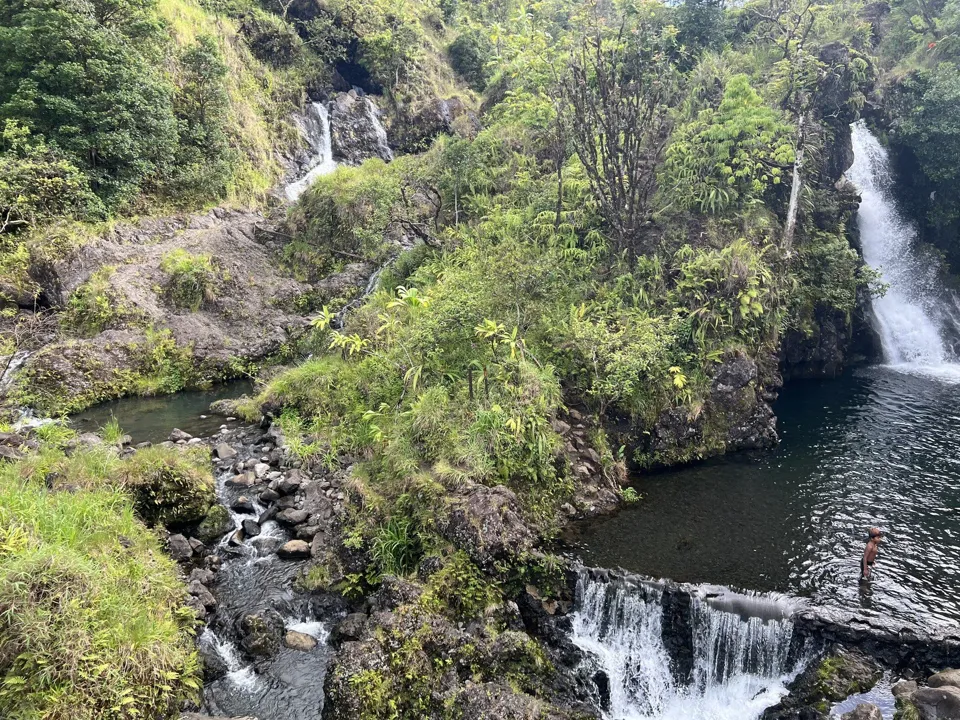
We had a few priorities, but some of the fun was simply stopping when something looked good. There are waterfalls tucked beside the road, huge and unusual tropical trees, thick rainforest, coastal views, small shops, fruit and food stands and other places that make you want to pull over. Official East Maui visitor guidance specifically points travelers toward farms, botanical gardens and fruit stands along the route, so those spontaneous stops really are part of the Road to Hāna experience.
Our advice: identify the two or three things you absolutely do not want to miss, then leave space around them. We would rather have time for an unexpected waterfall or interesting roadside stop than arrive with a list of 15 places we felt obligated to complete.
One important caveat: spontaneous does not mean stopping anywhere. Only pull over where parking is legal and safely off the highway. East Maui visitor guidance asks drivers to use designated parking and avoid places without visitor-welcoming signage or stops that require crossing private property.
The drive is part of the adventure
Expect constant curves, narrow bridges and sections where cars are moving in both directions through very tight spaces. It requires attention, and the driver will not get to stare at every waterfall. But we still preferred having our own car because we controlled the pace.
GuideAlong was particularly useful. The GPS-based narration gave us context as we drove and helped us decide what was coming up, what sounded interesting and where we wanted to spend our time. It was a nice middle ground between doing a fully guided tour and trying to research every mile marker ourselves.
Staying overnight is what made it feel unrushed
We stayed in an Airbnb beyond Hāna instead of forcing the entire road into one out-and-back day. This was probably the biggest reason we enjoyed the experience so much. Every waterfall or roadside stop did not feel like it was making us late for the drive back.
It also let us save the Kīpahulu section of Haleakalā National Park for the next part of the trip. Kīpahulu is about 12 miles beyond Hāna, so trying to drive from the main resort areas, stop repeatedly, hike Pīpīwai and then retrace the road in one day would have been a very different experience.
Black sand without the famous reservation
We had not realized in advance that the famous black-sand beach at Waiʻānapanapa required a reservation, so we did not have one. Instead, we stopped at another black-sand beach along the route and still had a great experience. It is a good example of why we would not let one missed reservation derail the day.
If Waiʻānapanapa is a must for you, plan that piece ahead. But the broader lesson from our trip is that the Road to Hāna has enough scenery and interesting places that you do not need every famous stop for the day to work.
Our priority stop: Pīpīwai Trail
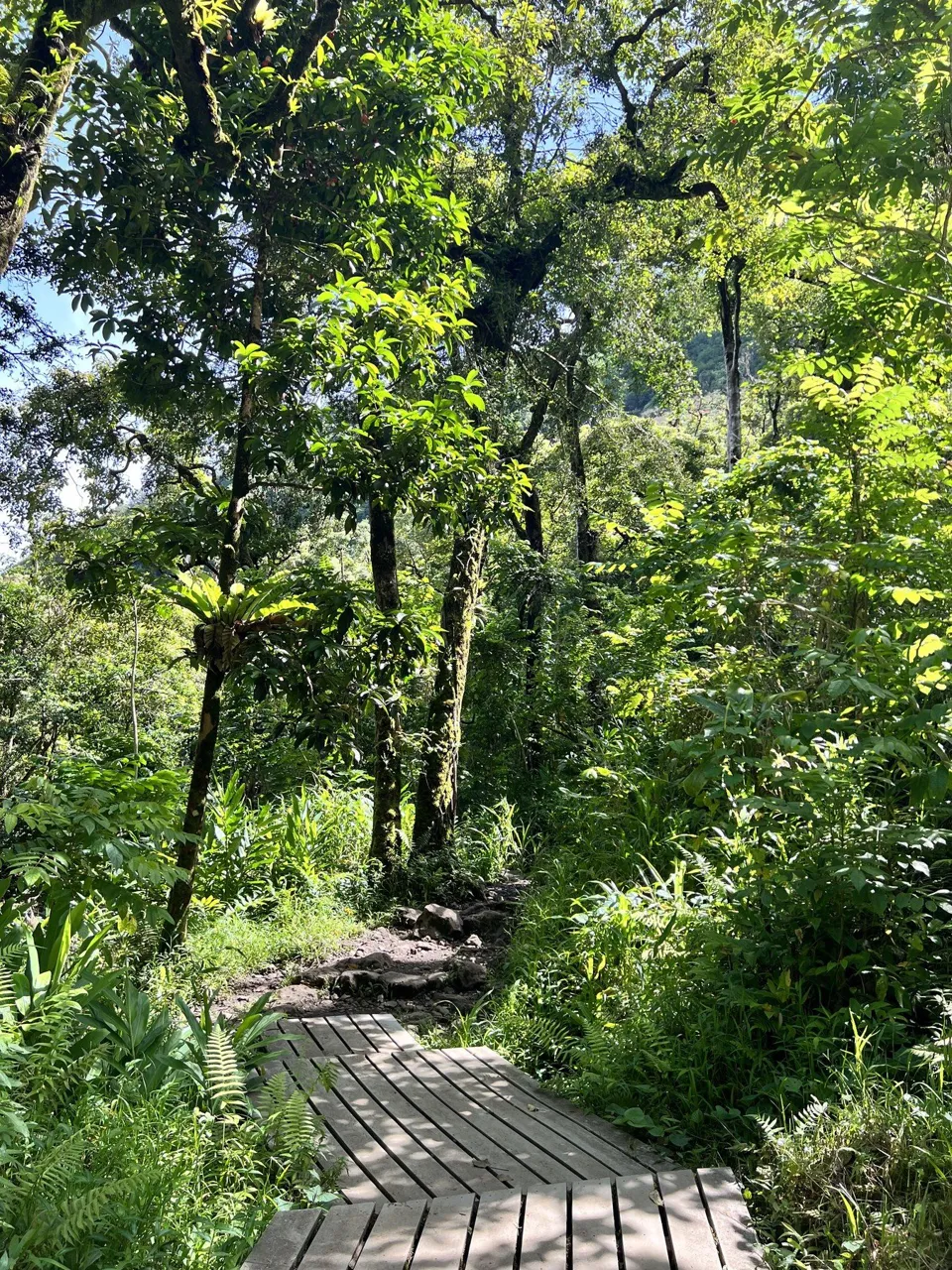
Pīpīwai Trail was one of our favorite parts of the Road to Hāna. It is about four miles round trip with roughly 800 feet of elevation gain, but what makes it memorable is the variety: rainforest, stream crossings and bridges, the bamboo forest and finally the view toward 400-foot Waimoku Falls. The bamboo section in particular feels completely different from the roadside sightseeing earlier in the drive.
The nearby Pools of ʻOheʻo - often called the Seven Sacred Pools - are also worth seeing while you are already in Kīpahulu. Current National Park Service rules do not allow entry or swimming in the pools; they can be viewed from the short Kūloa Point Trail. This is one place where older trip reports can be misleading, so check current park conditions before you go.
Twin Falls: good, but not essential
Twin Falls is near the beginning of the route. We remember an easy walk, swimming holes and people jumping into the water. It was enjoyable, but with so many stronger experiences ahead, we would call it good, not needed. If you are short on time, this is the kind of stop we would sacrifice before Pīpīwai or the experiences farther along the road.
How we would do it again
Day 1: Start the Road to Hāna without an overly rigid stop list. Use an audio guide, stop at waterfalls, trees, food stands, shops and viewpoints that genuinely interest you, fit in your reserved or chosen beach stop, and sleep in or beyond Hāna.
Day 2: Continue to Kīpahulu for Pīpīwai Trail and the Pools of ʻOheʻo viewpoint, then continue with the rest of your Maui plans rather than trying to squeeze the entire experience into one frantic day.
Worth it? Absolutely. But for us, the Road to Hāna was worth it because we gave it time. The waterfalls and famous stops are beautiful, but the real appeal was having enough flexibility to notice what was along the road and stop when we wanted to.
Why we use GuideAlong: On the Road to Hāna, it helped us decide what was coming up and whether a waterfall, viewpoint or detour sounded worth stopping for. That fit our plan to drive ourselves and leave room for spontaneous stops.
We have used GuideAlong on many of our road trips, and our whole family looks forward to it. The GPS-triggered audio works offline once downloaded, which is especially useful in parks with limited cell service. We like the mix of practical navigation, history and stories, plus the real-time-style prompts that tell you when to turn, what is coming up and which stops may be worth your time.
Affiliate link: we may earn a commission if you purchase through this link, at no additional cost to you. We partnered with GuideAlong after using their tours on our own trips.