 Beyond the Overlook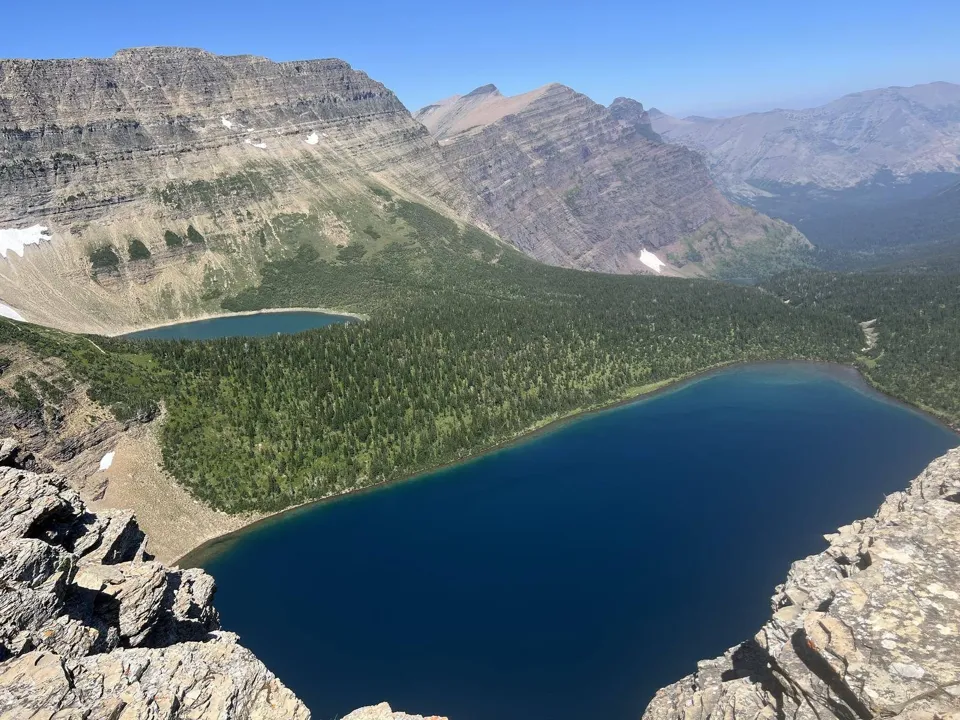
Why this hike stood out
Two Medicine was noticeably quieter than the park’s most famous areas, but the scenery was every bit as dramatic. This was a full day of hard hiking with sustained elevation, alpine lakes, two passes and miles of ridge views.
The 2026 trailhead surprise
Construction in Two Medicine changed access to the North Shore Trailhead during our visit. The official 2026 reroute requires an unbridged water crossing. We started in water shoes, crossed, then changed into hiking shoes. NPS also lists a South Shore alternative that avoids the ford but adds about one mile each way.
Oldman Lake and the climb
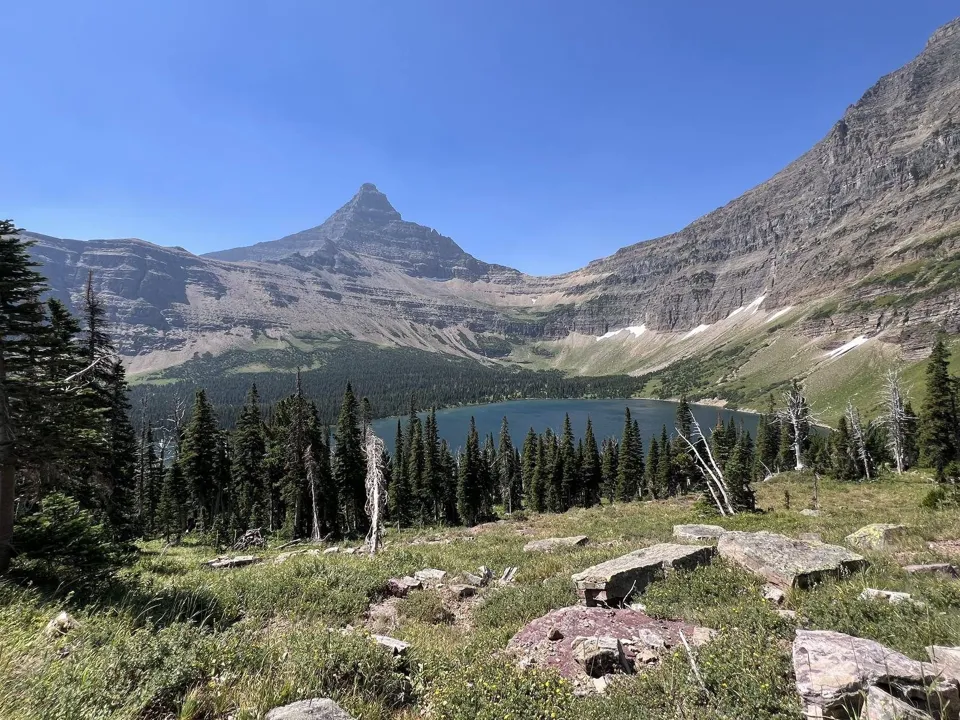
The early forest miles felt easy compared with what came later. You get views of Oldman Lake without needing to make it the focus of the day. Then the switchbacks begin. They felt relentless, but every bit of elevation opened up more of the landscape.
The ridge is the reason to do it
Once we reached the high country, alpine lakes appeared in different directions and the route became something completely different. The wind picked up, the trail crossed the passes and we spent miles walking with views on both sides. It felt far more remote than our other Glacier hikes.
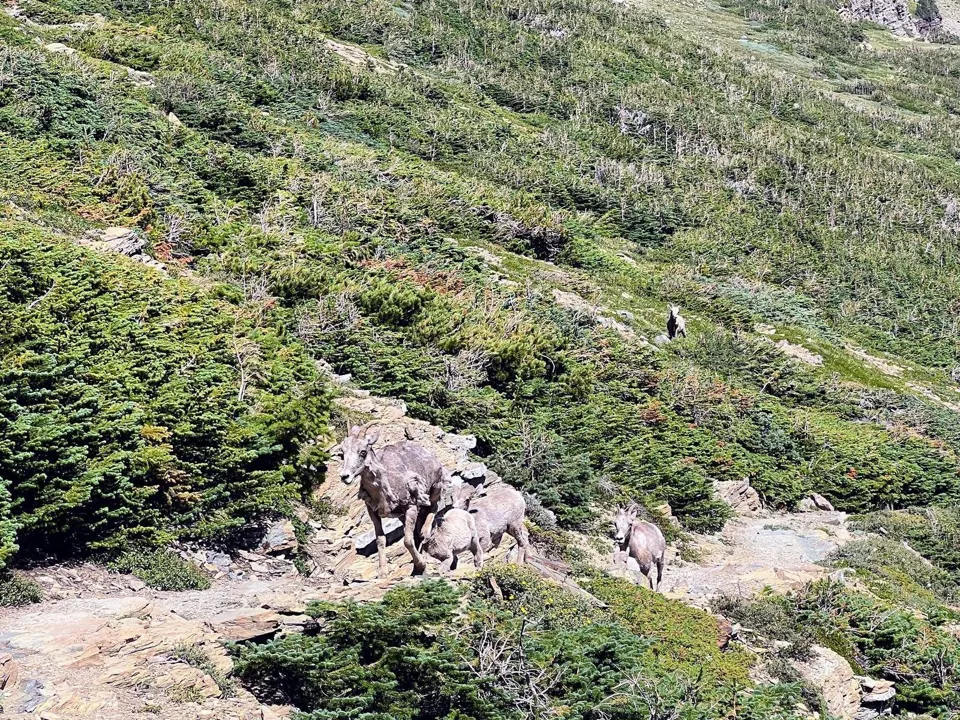
We also saw bighorn sheep high on the route, which made the day even better.
About taking the boat back
We used the Two Medicine boat to skip the final lake miles. You need the appropriate one-way ticket and you need to reach the dock in time. The problem is that once you commit to the boat route, the schedule can create unnecessary pressure late in a very long day.
We made it, but there was not space for everyone waiting on the first boat. The crew can return, but that means more waiting. If we did the loop again, we would probably just hike the final miles unless we had started early enough that the boat timing felt completely comfortable.
This is an all-day alpine hike
Dawson-Pitamakan earns its difficulty through distance, sustained climbing and long exposed sections rather than one single technical obstacle. Once you commit to the high route, you spend a lot of time above the lakes with enormous views in multiple directions. That extended ridge experience - not simply reaching a named viewpoint - is why this ranked so highly for us.
Oldman Lake is a useful mental marker before the bigger climb. From there the route becomes increasingly alpine, and wind can be a major factor. We experienced strong wind in this part of Glacier, and on an exposed ridge it changes how comfortable the day feels even when the trail itself is dry.
Early-season conditions can change the difficulty completely
This is not a hike where we would assume a summer date means a summer trail. Hiker reports regularly describe lingering snow around the passes early in the season. A dry late-summer loop and a snow-covered traverse are very different undertakings. Check Glacier's current trail status and be willing to turn around if the high route is not in condition.
Carry bear spray, layers, plenty of food and enough water for a long day. Stream crossings and water availability vary with the season, so we would not plan around an unverified water source without treatment.
Which direction should you hike Dawson–Pitamakan?
We went counterclockwise, up the Pitamakan side first, and would do it that way again. The climb is long, but it builds more gradually rather than front-loading the steeper Dawson ascent. On a hike this long, we appreciated being able to settle into the elevation gain instead of starting with the hardest climbing.
You’ll still have a substantial descent on the Dawson side, so this isn’t an “easy” direction - just the direction we preferred. Both directions are commonly hiked, and some hikers would rather climb the steeper Dawson section than descend it. For us, counterclockwise was the better fit.